Running RISC-V in a VM to test my snaps
Posted on Sat, Feb 21, 2026 (Last modified on Mon, Feb 23, 2026)
| Alan Pope
tl;dr: I wanted to test one of my snaps on riscv64. I don’t own any RISC-V hardware. I set up a QEMU VM on my ThinkPad, installed Ubuntu desktop inside it, and it actually worked. Slowly. Very slowly. But it worked.
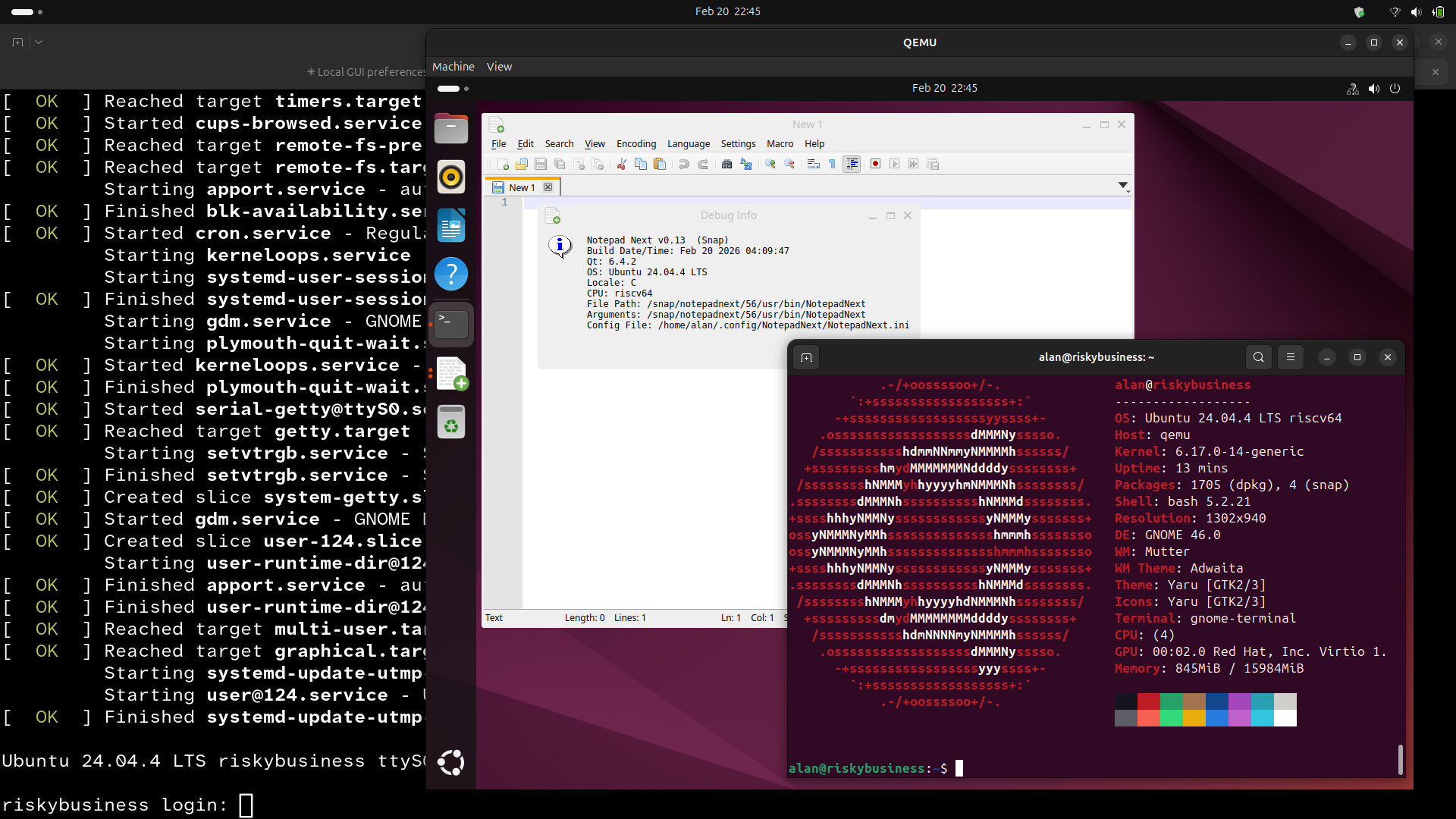
I maintain nearly 50 snaps in the Snap Store. Most of the time I test things on my ThinkPad running Ubuntu 24.04 (amd64), or my MacBook Air running Ubuntu Asahi (arm64). That covers the two architectures most people care about. But some of my snaps are built for more… exotic architectures. Things like s390x, ppc64el, and riscv64.
[Read More]
Malware Peddlers Are Now Hijacking Snap Publisher Domains
Posted on Sat, Jan 17, 2026 (Last modified on Mon, Feb 23, 2026)
| Alan Pope
tl;dr: There’s a relentless campaign by scammers to publish malware in the Canonical Snap Store. Some gets caught by automated filters, but plenty slips through. Recently, these miscreants have changed tactics - they’re now registering expired domains belonging to legitimate snap publishers, taking over their accounts, and pushing malicious updates to previously trustworthy applications. This is a significant escalation.
Context
Snaps are compressed, cryptographically signed, revertable software packages for Linux desktops, servers, and embedded devices. They use standard security primitives in the Linux kernel alongside technology developed by Canonical for Ubuntu.
[Read More]
Where are Podcast Listener Communities
Posted on Fri, Sep 13, 2024 (Last modified on Mon, Feb 23, 2026)
| Alan Pope
Parasocial chat
On Linux Matters we have a friendly and active, public Telegram channel linked on our Contact page, along with a Discord Channel. We also have links to Mastodon, Twitter (not that we use it that much) and email.
At the time of writing there are roughly this ⬇️ number of people (plus bots, sockpuppets and duplicates) in or following each Linux Matters “official” presence:
| Channel |
Number |
| Telegram |
796 |
| Discord |
683 |
| Mastodon |
858 |
| Twitter |
9919 |
Preponderance of chat
We chose to have a presence in lots of places, but primarily the talent presenters (Martin, Mark, and myself (and Joe)) only really hang out to chat on Telegram and Mastodon.
[Read More]
Guess Who's Back? Exodus Scam BitCoin Wallet Snap!
Posted on Mon, Mar 18, 2024 (Last modified on Mon, Feb 23, 2026)
| Alan Pope
Previously…
Back in February, I blogged about a series of scam Bitcoin wallet apps that were published in the Canonical Snap store, including one which netted a scammer $490K of some poor rube’s coin.
The snap was eventually removed, and some threads were started over on the Snapcraft forum
Groundhog Day
Nothing has changed it seems, because once again, ANOTHER TEN scam BitCoin wallet apps have been published in the Snap Store today.

[Read More]
Exodus Bitcoin Wallet: Follow up 2.0
Posted on Fri, Feb 23, 2024 (Last modified on Mon, Feb 23, 2026)
| Alan Pope
On Tuesday, I blogged about a series of Bitcoin scam apps published in the Canonical Snap store.
Edit: This section updated on 2024-02-23 to include a Canonical response as two new forum posts from sabdfl (Mark Shuttleworth, CEO of Canonical).
Two things! Three things!
Zerothly, today we have a response from Canonical.
There are actually two new posts from Mark. One in response to the thread asking whether crypto apps should be banned from the Snap store, and the other an acceptance that identity verification might need to be stronger on the Snap store. Here they are in full:
[Read More]
Exodus Bitcoin Wallet: $490K Swindle
Posted on Tue, Feb 20, 2024 (Last modified on Mon, Feb 23, 2026)
| Alan Pope
Edit: There’s a short follow-up to this post: Exodus Bitcoin Wallet: Follow up.
tl;dr: A Bitcoin investor was recently scammed out of 9 Bitcoin (worth around $490K) in a fake “Exodus wallet” desktop application for Linux, published in the Canonical Snap Store. This isn’t the first time, and if nothing changes, it likely won’t be the last.
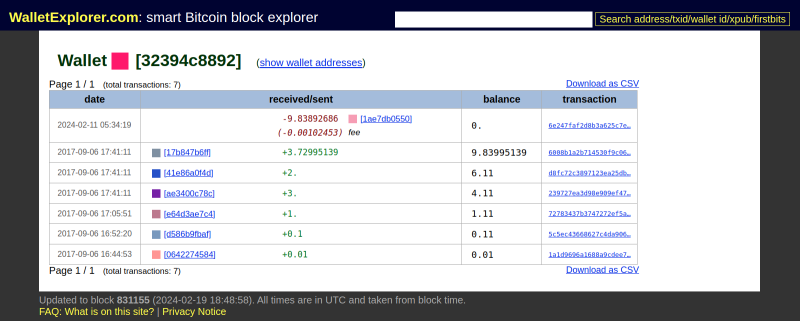
This post turned out longer than I expected. So if you don’t have the time there’s a briefer summary at the bottom under “In summary (the tl;dr)” along with my suggestions on what Canonical should do now.
[Read More]
Ubuntu Summit 2023 was a success
Posted on Tue, Nov 7, 2023 (Last modified on Mon, Feb 23, 2026)
| Alan Pope
Last week, I wrote about my somewhat last-minute plans to attend the 2023 Ubuntu Summit in Riga, Latvia. The event is now over, and I’m back home collating my thoughts about the weekend.
The tl;dr: It was a great, well-organised and run event with interesting speakers.
Here’s my “trip report”.
Logistics
The event was held at the Radisson Blu Latvija. Many of the Canonical staff stayed at the Raddison, while most (perhaps all) of the non-Canonical attendees were a short walk away at the Tallink Hotel.
[Read More]
Ubuntu Core Snapdeck
Posted on Fri, Nov 3, 2023 (Last modified on Mon, Feb 23, 2026)
| Alan Pope
At the Ubuntu Summit in Latvia, Canonical have just announced their plans for the Ubuntu Core Desktop. I recently played with a preview of it, for fun. Here’s a nearby computer running it right now.

Ubuntu Core is a “a secure, application-centric IoT OS for embedded devices”. It’s been around a while now, powering IoT devices, kiosks, routers, set-top-boxes and other appliances.
[Read More]
Heading to Ubuntu Summit 2023
Posted on Wed, Nov 1, 2023 (Last modified on Mon, Feb 23, 2026)
| Alan Pope
Ubuntu Summit

This weekend the Ubuntu Summit begins in Riga, Latvia. I originally had no plans to attend until a recent change in circumstance, and a late space became available.
The Ubuntu Summit is “an event focused on the Linux and Open Source ecosystem, beyond Ubuntu itself. Representatives of outstanding projects will demonstrate how their work is changing the future of technology as we know it.”.
Essentially it’s a conference-style event with multiple tracks hosting speakers talking about Ubuntu and Linux-adjunct topics.
[Read More]
Ninety percent updated in a week
Posted on Thu, Oct 12, 2023 (Last modified on Mon, Feb 23, 2026)
| Alan Pope
The other day I wrote about snapcraft metrics, a tool that enables publishers to extract application metrics from the snap store. Something I’ve noticed which I wanted to share, was how quickly automatic updates roll out to an application’s user base.
So I took the metrics from an application that I published in the snap store and scrubbed the names and version numbers. I charted below the speed that devices roll over from one release to the next. Here’s an image that I think clearly shows the rapid rise as a new release is published, and the rapid drop-off, of the previous version. This chart covers a month where three versions were published, a week or so apart.
[Read More]